• This forum is strictly intended to be used by members of the VS Battles wiki. Please only register if you have an autoconfirmed account there, as otherwise your registration will be rejected. If you have already registered once, do not do so again, and contact Antvasima if you encounter any problems.

    For instructions regarding the exact procedure to sign up to this forum, please click here.
  • We need Patreon donations for this forum to have all of its running costs financially secured.

    Community members who help us out will receive badges that give them several different benefits, including the removal of all advertisements in this forum, but donations from non-members are also extremely appreciated.

    Please click here for further information, or here to directly visit our Patreon donations page.
  • Please click here for information about a large petition to help children in need.

My Hero Academia: Deku's Final Smash Calculation

Status
Not open for further replies.

Therefir

VS Battles
Content Moderator
Calculation Group
Messages
10,201
Reaction score
9,957
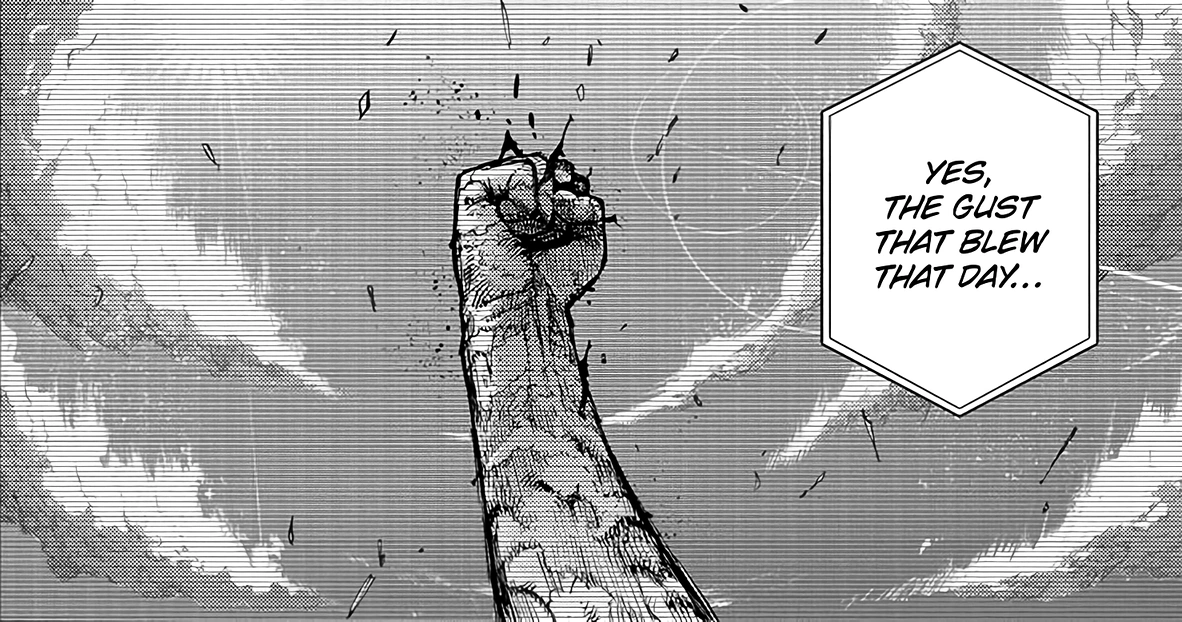
Hello everyone. As many here probably know, there are multiple calculations for this feat involving Deku dispersing a storm and his shockwave reaching America on the same day (Episodes 167-168 in the anime, Chapters 423-424 in the manga).

The calculation currently in use is the one made by TheRustyOne (42.37 Petatons), and I also made an updated version of his calc using the anime's dispersion speed (7.21 Exatons), which is accepted as canon to the story.

In this thread, I will explain why these two calculations are no longer acceptable, as the anime's visuals directly contradict their assumptions.

In both versions of TheRustyOne's calcs, the initial shockwave/dispersion speed is being used, and it's assumed that this dispersion speed was maintained with zero deceleration all the way to the edge of America.

However, this is not what we see in the anime. Once the initial dispersion is completed, the shockwave dissipates, and the cloud dispersion no longer expands, at least not at the same speed as before.

This means we cannot use the initial dispersion speed for the shockwave that reached America, since, as shown in the anime, that initial dispersion speed dissipates/slows down after creating a large hole in the storm (Episode 169).

My solution is simple: use only what we actually see in the anime. Take the on-screen dispersion speed and apply it strictly to the area that was visibly dispersed at that speed.

I made that calculation here, which I believe should be the calc used (18.65 Teratons).

And this one here using the ground to cloud top distance, although there are issues with the angle (890 Gigatons).
There's also the statement about how much energy is needed to create winds that changed the weather in America on the same day, I also made that calculation here (7.97 Teratons).
And TheRustyOne also made a new version arguing that the whole storm was blown away (44.84-512.91 Teratons).

What version is selected would depend on the calculation group members' votes.

Final Punch

Agree: 5 (Damage3245, Dalesean027, TheRustyOne, Floxy178, Drite77)

Disagree:


Final Smash

Agree: 2 (Drite77, Damage3245)

Disagree: 1 (TheRustyOne)


Strong Winds

Agree: 1 (Dalesean027)

Disagree: 3 (Drite77, TheRustyOne, Damage3245)


Second Final Smash

Agree:

Disagree: 1 (Damage3245)
 
Last edited:
One last small thing I forgot to mention is that I was informed by Calc Group member Damage3245 that the inverse square law cannot be applied to any of these calculations, as using it would be redundant and would effectively amount to working backwards from an assumed result rather than deriving the energy from the feat itself.

This means the results in both versions of TheRustyOne's calculations (42.37 Petatons/7.21 Exatons) should be divided in half, resulting in 21.185 Petatons and 3.605 Exatons respectively.
 
should we really let the anime disqualify a calculation from the manga? I get that the anime is considered canon but is horikoshi directly working on the animation of the cut itself? even if he's involved with the overall production I kinda doubt mangaka go that far to correct animation cuts because they dont yield a certain amount of joules, I feel like that might unfairly downgrade the feat unless there's a statement hard capping the anime as primary canon lol
 
should we really let the anime disqualify a calculation from the manga? I get that the anime is considered canon but is horikoshi directly working on the animation of the cut itself? even if he's involved with the overall production I kinda doubt mangaka go that far to correct animation cuts because they dont yield a certain amount of joules, I feel like that might unfairly downgrade the feat unless there's a statement hard capping the anime as primary canon lol

Nothing is being disqualified from the manga. The original method is highly flawed as it uses the speed that Deku's shockwave travels at vertically to reach the cloud to be the horizontal dispersion speed of the cloud with no loss in speed despite affecting exponentially more and more mass over time.
 
should we really let the anime disqualify a calculation from the manga?
Well, it's not that the manga supports or contradicts the anime; rather, the dispersion doesn't appear to stop in the manga simply because it's presented through still images, which cannot convey changes over time.

Also as Damage said, the original calculation measures the vertical speed of the shockwave, so it's wrong either way.
 
Nothing is being disqualified from the manga. The original method is highly flawed as it uses the speed that Deku's shockwave travels at vertically to reach the cloud to be the horizontal dispersion speed of the cloud with no loss in speed despite affecting exponentially more and more mass over time.
ig you have a point there
 
The calculation Therefir is using here (1.funny number Petatons) was previously a bit bigger, and I've accepted in that stage because that method was being used before in the manga version of the Cloud feat. I wasn't sure about its usage, but I figured it was an accepted method considering it was accepted twice for the verse.

Regardless, the new version, even if edited without being notified, should probably work. I was also unsure about the original calc itself (The 7 Exatons one), I was asked to comment on it but I refrained from doing so and only commented on the second calculation, as I figured it would be more accurate after a few adjustments.

I yapped a lot, TLDR, the 6-A end cloud feat likely works the best here, its size is easier to figure out and we actually see the feat happening, unlike the 7 Exatons one, where I believe some of it is being calced by using statements
 
Thanks, and sorry for not notifying, the slightly bigger result you saw before came from using the inverse square law, which I later had to discard because of this.
I saw it and figured out why it changed by that comment, just wanted to make sure to note the calc was a bit higher before. I don't mind the updated version, as I said it above
 
Should we use the average 8Km cumulonimbus cloud height? Can't we also use the assumed 21Km thickness to pixel scale it's altitude?
 
Should we use the average 8Km cumulonimbus cloud height? Can't we also use the assumed 21Km thickness to pixel scale it's altitude?
The angle of the shot is not suitable for measuring the distance between the cloud bottom and the ground.

Thanks everyone for the feedback. I'll wait for the grace period and then create a CRT to apply the calculation.
 
Should we use the average 8Km cumulonimbus cloud height? Can't we also use the assumed 21Km thickness to pixel scale it's altitude?
To add to this the assumptions made in the calc about storm heights are just clearly wrong and refuted in the scan that is supposed to justify the storm thickness in the first place.

The height above Sea level a cloud can reach is entirely dependant on the tropopause in said region(which is even said in the scan as an hard cap for storm cloud formation) and the altitude of the tropopause depends on temperature and how far away from the equator a region is. For japan the tropopause would be about 15km at most. 21 km is only possible at the equator and only if the clouds base form immediately above sea level. If we assume the cloud forms 8km above that level it means its impossible for the cloud to be 15km tall as that would mean forming above the tropopause. It would only be 15km-8km=7km tall from cloud base to top.

Additionally I am pretty sure it is said in the manga that it would enter the jet stream to reach US and that has a height of 9 to 14km so I would assume logically the cloud is contained within said height. Making it 5km tall

And just because it can be 15km tall or even 5km tall doesnt mean it necessarily is. The visible dispersion could easily have a smaller cloud height than the maximum thats even possible. Given that we could just as well use ground level to top of the clouds from the scans I think its much more logical to pixel calc it from ground level to top of the cloud level under the assumption that it has an altitude equal to the tropopause or the jet stream.
 
Powerful storms, especially tropical thunderstorms, can push their cloud tops past the tropopause into the lower stratosphere.

May I ask where those numbers are coming from?
 
Powerful storms, especially tropical thunderstorms, can push their cloud tops past the tropopause into the lower stratosphere.

May I ask where those numbers are coming from?

I found these which show the tropopause height which I presume is at about summer time. It should be way lower in the winter although I dont think that matters here. Additionally the statement from chapter 374 about the jet stream that became true later. So it should be contained within jet stream height anyway.

The tropopause is like a cap stated even by the scan used in your calc a storm cloud can at most pierce it but generally not rise a significant distance above it. If the tropopause it at an altitude of maybe 16km in japan you cant have a cloud be 21.5km tall. And we dokt know whether the clouds in the scan automatically are at the most possible width they can be. It just makes much more sense generally to use the ground to top of cloud height as a reference rather than making assumptions about the cloud base to top height.
 
It just makes much more sense generally to use the ground to top of cloud height as a reference rather than making assumptions about the cloud base to top height.
We can't use ground to top of cloud height using the shots that we have due to their angle.
 
We can't use ground to top of cloud height using the shots that we have due to their angle.
Why not? Just go at a 90° angle from the center of the line that connects both ends of the dispersion until you reach the ground. I'd even argue the angle of the clouds along with ambiguity of what constitutes to its height make it harder than just doing that
 
Why not? Just go at a 90° angle from the center of the line that connects both ends of the dispersion until you reach the ground. I'd even argue the angle of the clouds along with ambiguity of what constitutes to its height make it harder than just doing that
Do you mean something like this?

If not, I would appreciate it if you could show the pixel scaling to illustrate exactly what you mean.
 
Last edited:
Yeah sure


Something like this. 460km across is a lot so I think this would be closer personally.

Though so, I edited my comment too late.

So you want to me to use 14 kilometers or can I use the 16 kilometers for the Japan tropopause?
 
Though so, I edited my comment too late.

So you want to me to use 14 kilometers or can I use the 16 kilometers for the Japan tropopause?
Personally think 14km fits it the most due to the jet stream statement but it ultimately depends on what you guys decide on. Just trying to give some input.
 
Alright, I will use 16 kilometers since the storm was formed in Japan's southwest due to a tropical low-pressure system and repeated heat spikes.
 
Last edited:
Status
Not open for further replies.
Back
Top
