Wouldn't they just need to heat it at least as fast or faster than the thermal energy disperses from the core into the mantle (and from there through multiple pathways to the surface)? To keep it heated, at that. And I'm not actually sure that only one Phaethon alone keeps things warm, there might be multiple. The other question is if the radiation-based heat production should be accounted for or not as something that keeps the core from cooling.
Some of those values might help:

en.wikipedia.org
Quentin Williams, associate professor of earth sciences at the University of California at Santa Cruz offers this explanation

www.scientificamerican.com
Edit:
To simplify, the lower end of the low end might just be the energy needed to replace the energy that gets transferred to the surface so that the geothermal flow keeps going.
Which, according to
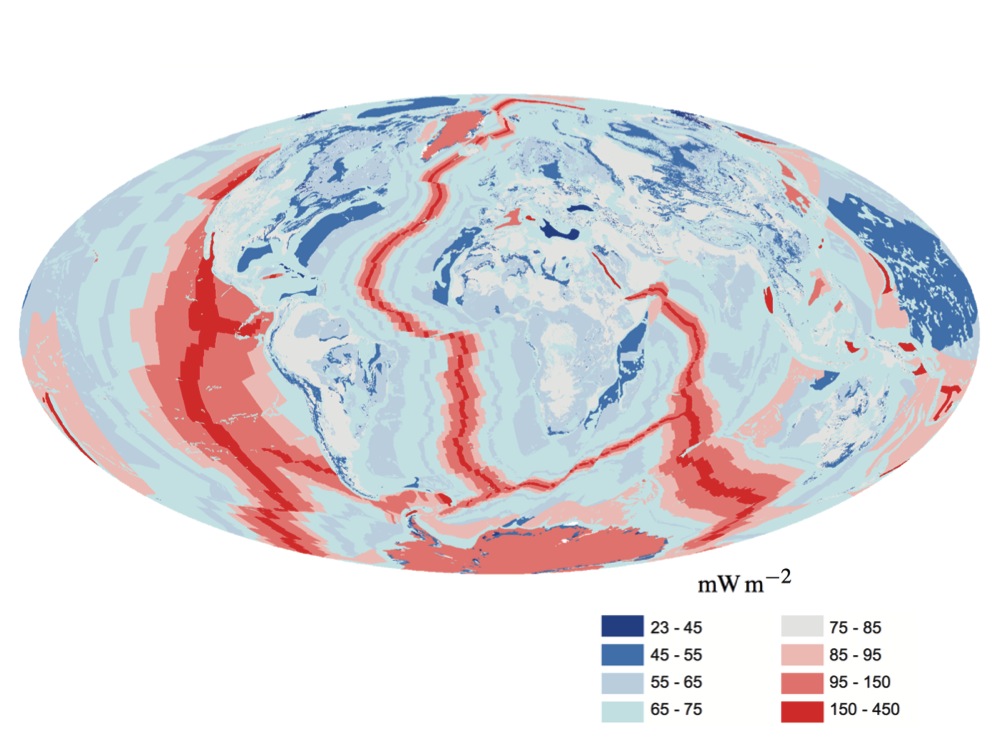
this should be around 47TW or so (cut by up to half if we want to consider the energy produced by radioactive decay).
Edit2:
I did look up some generic numbers ... as should be obvious, the rate at which planets cool (when ignoring the heat-inducing effect of radioactive decay, that makes up up to half of relevant values) especially depends on surface area to volume (smaller planets=bigger relative surface, so cool faster; bigger planets=smaller relative surface compared to volume, so cool slower), with
that ratio being: = (4*pi*r²)/(4/3*pi*r³) = 3/r .
So the upper bound of aforementioned lower end of the low end would be the based on up or downscaling the earth value one utilizing the values of biggest rocky planet (the biggest vaguely earth-like mega-earth) or the smallest rocky planet with both proper core and potential for vulcanism, whichever gives the higher cooling value-.
Edit3:
To actually make different planet sizes comparable (note that bigger planet cools slower relatively speaking - besides the obvious issue with radioactive decay - but has more total heat), it seems one needs to do the following (I had to look it up first to be more sure) or as otherwise mathematically adequate:
(Smaller Planet ratio)/(Bigger Planet ratio) = (3/(radius smaller planet)*(radius bigger planet)/3) = difference in cooling speed between bigger and smaller planet
Edit4: This Sunday, I decided to a quick look at this again.
Based on what one could use for the topic partially mentioned in edit2 and edit3, the smallest "planet" that might make sense is the moon
Io, the largest is the mega-earth
Kepler-277c.
As should be obvious, it should be noted that planets without vulcanism and planets that don't have plate tectonics cool slower, so would less heating to keep warm or heat up; less intuitive is that smaller planets
might possibly be
less affected by tectonics associated energy loss and thus also cool slower, so things might still even out at low size, despite all the generally "smaller planet has higher surface-to-volume ratio and thus cools faster". On that note, the question about if plate tectonics are present and various other internal mechanisms are also affected by size (and other events, just like various factors influence the presence of geodynamo and magnetic field), with those usually being within the range of
0,1 and 10 earth masses, so especially small or especially large might cool slower as one might assume, as there's potential absence of tectonics (and there's also the topic about larger planets often having higher internal temperatures).
Anyway, a very simplified and simplistic calculation for some lower end of the lower end might be:
(((47TW×64)/3,36 = ~895 TW. (Kepler-277c as example, compared to the base value provided by earth. For extra simplicity, the assumption is that it cools as a planet with comparable Surface-to-Volume ratio compared to earth - i.e. 3,36x slower cooling compared to earth -, further combined with the assumption that the difference in mass - i.e. it has 64x earth mass - has some implication in regard to internal heat that might actually cool down and the like). The actual value should obviously be higher because it needs to heat up a lot, do so reasonably fast - i.e. not over the course of hundred million years - , make up for the time it stays at the surface/the mantle to bother adventures. Multiplying this number by anything between factor 100 and factor 100000 seems reasonable depending on interpretation seems like a reasonable low ball in regard to this possible calculation option (i.e. planet loses internal heat to surface, which is then, well, gone over time and the Phaethon has to then replace at least as much - or even much more - thermal energy).
As for other stuff, this should also be relevant (among other things, the composition and actual temp required to freeze/melt the inner core is of interest, as is the mechanism regarding cooling of the outer core as thermal heat leeches into the mantle):
Researchers have demonstrated in the lab how well a mineral common at the boundary between the Earth's core and mantle conducts heat. This leads them to suspect that the Earth's heat may dissipate sooner than previously thought.
www.sciencedaily.com
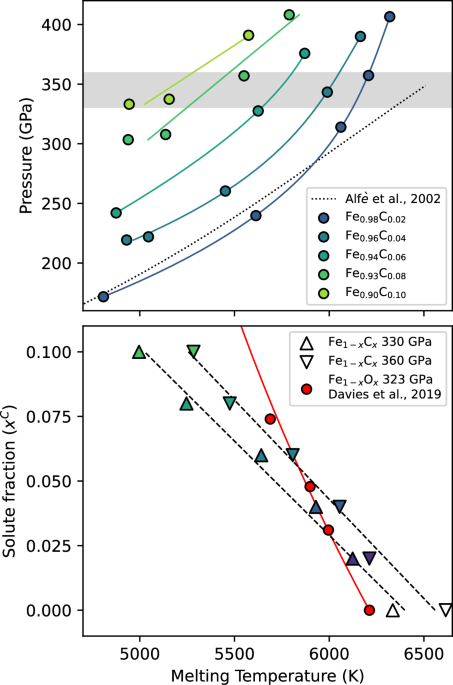
The secret ingredient that allowed Earth's inner core to freeze may finally have been discovered - carbon

www.sciencefocus.com
The composition of Earth’s inner core can be constrained by the supercooling required for its formation. Based on molecular dynamic simulations this work shows that inner core nucleation from an iron-carbon composition fits geophysical constraints.

www.nature.com
Scientists are working hard to figure out how long the Earth's core will last.

interestingengineering.com