- 567
- 546
Simple Tier 0 Upgrade, Nothing much to say other than that, If accepted, changes should be held off as another thread will be made to discuss the profile changes/additions and character scalings.
Argument
Summary
Votes:
Agree:
Disagree:
Neutral:
Argument
The Series was written by Rei Hiroe and the televised anime series was directed by Ai Aoki. The latter is quite relevant as he was involved in many projects relating to the Nasuverse. Including but not limited to directing and semi-writing The garden of sinners. This is infact significant as alot of the things im going to talk about in this is creepily similar to the Nasuverse cosmology. This gives us contextual backing for the scale
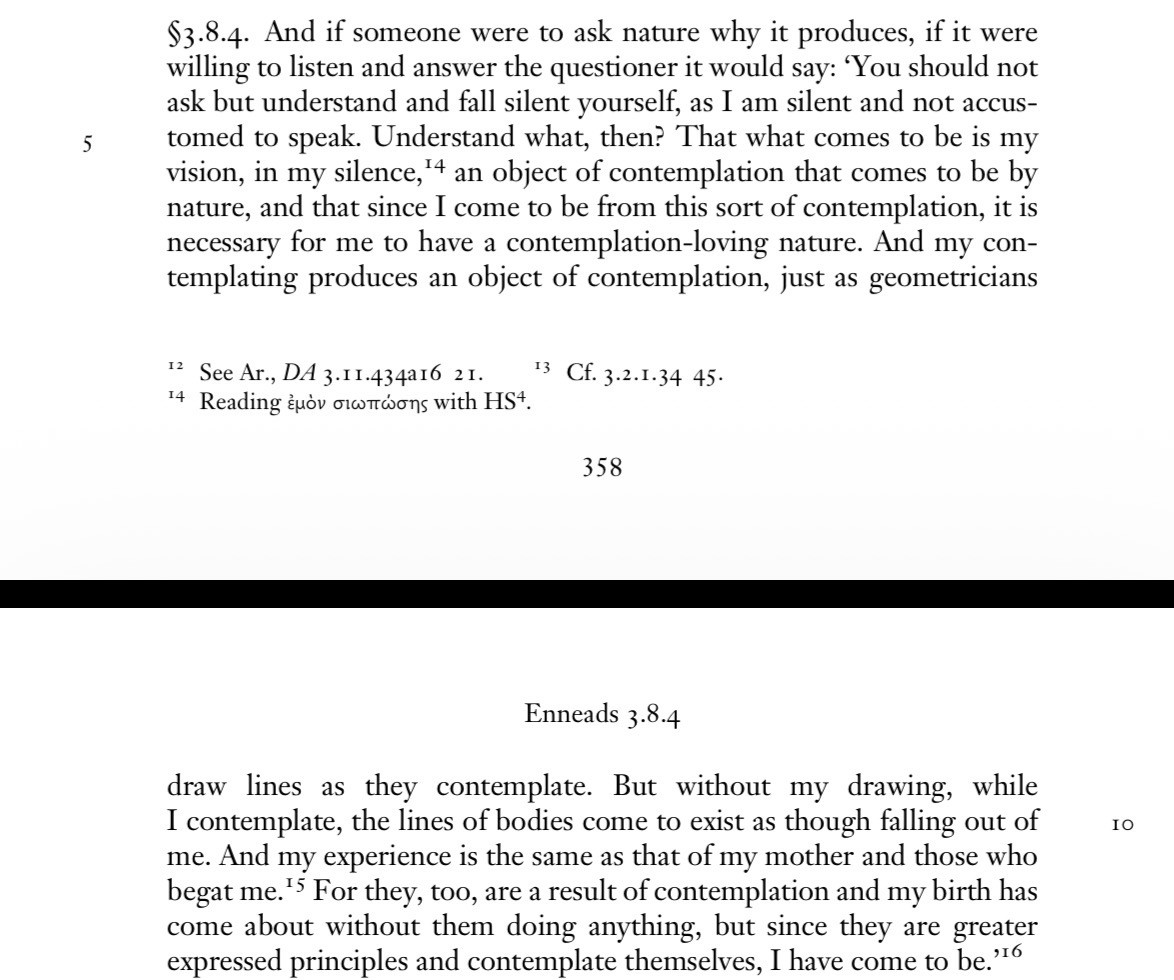
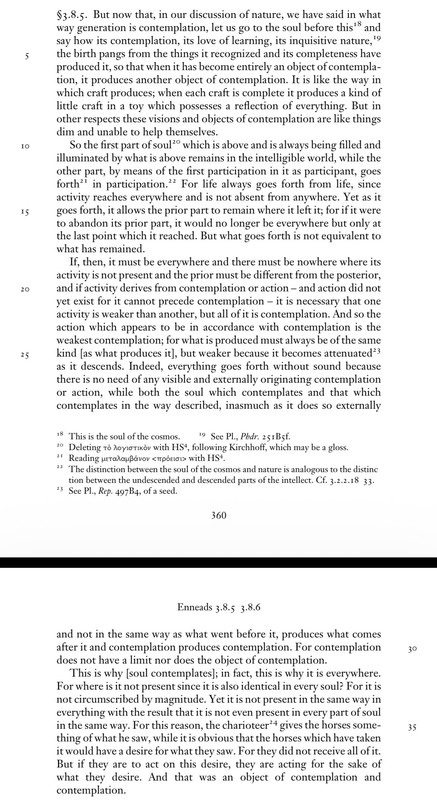
Now getting into the actual scaling stuff, i will be referencing the philosophy known as Neoplatonism. There are quite a few reasons as to why we should understand the series through their world view. With the first one being sufficient parallels between their ideals such as emanationism, a principle of reincarnation, and the pre-existence and immortality of the soul. Which exactly aligns with their beliefs. More of these similarities will be shown but not mentioned. The point of this is to outline the structural isomorphism between the two in order to properly classify the series' scaling and thereby how its functionally the same. This gives us philosophical backing for the ideas presented in the series. Note that this is in no way an assertion that the whole series is neoplatonic as that is not necessary and quoting Ultima:
Now getting into the actual scaling stuff, i will be referencing the philosophy known as Neoplatonism. There are quite a few reasons as to why we should understand the series through their world view. With the first one being sufficient parallels between their ideals such as emanationism, a principle of reincarnation, and the pre-existence and immortality of the soul. Which exactly aligns with their beliefs. More of these similarities will be shown but not mentioned. The point of this is to outline the structural isomorphism between the two in order to properly classify the series' scaling and thereby how its functionally the same. This gives us philosophical backing for the ideas presented in the series. Note that this is in no way an assertion that the whole series is neoplatonic as that is not necessary and quoting Ultima:
Another thing to note is the negative aspect taken towards ontology. They start with the epistemic doubt of certain phenomena then existential disregard and explores the triviality of the senses and finally ontology and solipsism, The only key takeaway here is that ontology is structurally approached through skepticism and that due to its coherency, it gives us epistemic backing for the ideas presented here as it explicitly shows that the author atleast has some knowledge on the topicA verse does not need to create a perfect reproduction of any of the above accounts in order to qualify for the tier, as long as all of the sufficient conditions for it are met
Imaginative Force as the second principle, emanates reality through self-contemplation. This principle however isnt a regular one, rather its a proper unity. The extent of this unity is that, as per the scans, Imagination is the unity of creator, created and viewer. This process is for the actualization of storyworlds. Consider this, the real world itself is a story which was thought of by imagination, this entails that by having to go through the unification process, the creator part of the unity during that point of reference was itself, This means that each part is analogically identical or fully represents the whole while having real distinctions(as plotinus would say "each is all"). The reason i am arguing analogical identity rather than strict is that we know for a fact that the distinctions are real and not conceptual. While it could be interpreted as strict identity due to it not being impossible in a fictional setting while keeping distinctions real, it isnt that relevant since both entail that imagination is fully actualized and thereby pure act(Or IS being) and the series is already structurally isomorphic with neoplatonic concepts which uses analogical identity. This already qualifies it for tier 0, however it lacks 1 trait, Primacy(more on this in the next section). Due to this i propose it qualify for the next best tier, High 1-A+ (Specifically, embodying the framework)
This section is to discuss the infinite abyss, which i regard as the first principle. We know its the first principle as its the thing that emanated imagination. Its the "One" before the intelligible "One" as the dots imply unity/oneness, it cannot be caused since there is nothing prior to it to cause it(funnily enough this could be taken as extreme apophaticism). It would by proxy be the source of all things and its fitting that its also the teleological end of all things, with it being described by Altair as a "beautiful" ending. The Infinite abyss, is an abyss(obviously), but this entails that it lacks information(and is also prior to it/beyond it). Information can be both intelligible determination and ontological determination, with the former being strictly within imaginative force. Since essence is just determination(in the broadest sense), it eventually implies multiplicity and being. By lacking this, the infinite abyss cannot be classified as a being and thereby it cannot be predicated, as that would imply limitations such as participating in being. And given that its before imaginative forces unity, it does not have the distinction between oneness and manyness Any reference in the series describing the abyss is purely analogical.
Summary
- Imagination/Imaginative force is the totality and ground of all creation. it has parts with real distinctions, however each part fully reflects the whole. That shows that its fully actualized as there is nothing it "can" be since it already is. Being fully actualized means that it is being which qualifies for Tier 0, but it was caused so it instantly loses any hopes to be that tier, hence the proposal High 1-A+
- The infinite abyss is beyond imagination and hence all its qualities, such as unity, it lacks and is beyond information which is akin to essences, if something has an essence it participates in being, therefore the abyss cant be a being nor being itself being for it is beyond being and uncaused (there is nothing before it to cause it), therefore Tier 0
Votes:
Agree:
Disagree:
Neutral: