• This forum is strictly intended to be used by members of the VS Battles wiki. Please only register if you have an autoconfirmed account there, as otherwise your registration will be rejected. If you have already registered once, do not do so again, and contact Antvasima if you encounter any problems.

    For instructions regarding the exact procedure to sign up to this forum, please click here.
  • We need Patreon donations for this forum to have all of its running costs financially secured.

    Community members who help us out will receive badges that give them several different benefits, including the removal of all advertisements in this forum, but donations from non-members are also extremely appreciated.

    Please click here for further information, or here to directly visit our Patreon donations page.
  • Please click here for information about a large petition to help children in need.

Goodbye Unknown Voltage Electricity

Messages
4,485
Reaction score
661
I think I found a way to get the voltage of non-lightning electricity:
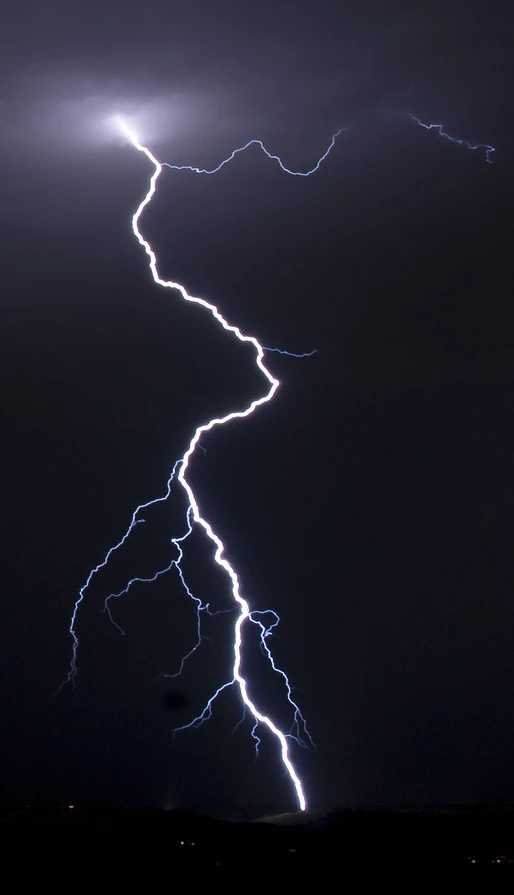
So an electric spark forms when the air reaches it's breakdown voltage. And the distance it can travel is proportional to it's voltage as evidenced by how it needs 3 Volt to travel 1 micrometer, 30, 000 Volts to travel 1 centimeter, and 3 million volts to travel 1 meter. Therefore it would be possible to get an electric spark's voltage by getting the maximum distance it traveled and multiplying it by either 30 thousand or 3 million depending on whether the distance is in centimeters or meters respectively.
 
Wouldn’t this be better in the CG board? Assuming it’s legit we still need amperage for this stuff for any meaningful calcs (as far as AP is concerned)
 
This is a misunderstanding of how electricity works. Sparks depend on things like the air, and non-linear electricity.

It's like gravity, expect theres a difference in the gravitational constant each mm.
I don't think fiction really bothers much with minute details like that(unless of course it's something like Sci-fi which often does like explain those kinds of details) so I'd say this could work for verses that make use of electricity, but often don't have a stated value for their electrical attacks.
 
I don't think fiction really bothers much with minute details like that(unless of course it's something like Sci-fi which often does like explain those kinds of details) so I'd say this could work for verses that make use of electricity, but often don't have a stated value for their electrical attacks.
I don't get this.
 
I don't get this.
Fiction often ignores aspects of reality that it deems as unnecessary to it's story/world, which is why "The Air Not There" trope is nigh-omnipresent across fiction so I don't see why we would need to account for every variable. Plus the electromagnetic forces that drives electricity is roughly 10²⁰ times stronger than gravity. Because of this gravity's effects on electricity is just ignored in practical engineering due to how negligible it's effects are.
 
Last edited:
That was an analogy for how electricity works, not how gravity effects it.
Well my point still stands anyway, which is that we don't actually need to account for all the variables as there is precedent in both fiction and the real world for ignoring them. Also an electric spark becomes largely immune to environmental variations(humidity, pressure), when the applied electric field is significantly higher than the dielectric breakdown strength of the medium(which in this case would be the air). As such once the voltage is high enough it can ionize the air regardless of initial impurities, air pressure, or temperature, which further supports my point that we don't need to account for additional variables.
 
Wattage for example. Voltage alone can most definitely make for a decent showing of AP though. It's essentially the force behind the electrical current.
Voltage isn't a measure of the energy of the electron flow, but the amount of force pushing it forward. Current itself is about the speed of electron exchange rate, but not the power consumption or generation of the electrical path. It's Watts that measure actual tier able energy.

Breakdown Voltage's main thing is that the resistance of the object imploded and makes the conductive path significantly less resistant. You can watch this clip for a physical example of a Breakdown Voltage in an apple.

As a prime example, the Electric Chair uses 2,000 Volts with 5 Amps, or 10,000 Watts to kill a human. But it does so because the 2k Volts are enough to trigger breakdown in human tissue, which then allows the full current to pass through.

Ultimately knowing how much voltage it takes to breakdown somethings resistance only goes so far. You still need to know the current of the electrical charge to get a tierable level of AP. The feat is also only scalable if you're exposed to it for a sufficient amount of time.
 
Voltage isn't a measure of the energy of the electron flow, but the amount of force pushing it forward. Current itself is about the speed of electron exchange rate, but not the power consumption or generation of the electrical path. It's Watts that measure actual tier able energy.
Static electricity is characterized by high voltage (potential) and very low, instantaneous current so you can't really use Watts to measure it, thus making voltage the most practical way to do so.
Breakdown Voltage's main thing is that the resistance of the object imploded and makes the conductive path significantly less resistant. You can watch this clip for a physical example of a Breakdown Voltage in an apple.
To be clear the main topic at hand isn't about the breakdown voltage itself but rather the electric spark that forms upon the air reaching it, and how the distance an electric spark can travel is proportional to it's voltage with us using that to determine what it is.
As a prime example, the Electric Chair uses 2,000 Volts with 5 Amps, or 10,000 Watts to kill a human. But it does so because the 2k Volts are enough to trigger breakdown in human tissue, which then allows the full current to pass through.
Watts=Voltage × Amps, so even if knowing the voltage alone isn't enough to get an AP value I'd say it would still help in making the process easier
Ultimately knowing how much voltage it takes to breakdown somethings resistance only goes so far. You still need to know the current of the electrical charge to get a tierable level of AP. The feat is also only scalable if you're exposed to it for a sufficient amount of time.
I'd say it would be pretty helpful as due to what I explained above.
 
Last edited:
Static electricity is characterized by high voltage (potential) and very low, instantaneous current so you can't really use Watts to measure it, thus making voltage the most practical way to do so.
What I mean is that the wiki's usage of AP means that Watts are the only thing that's tierable. Having extreme voltage doesn't translate to Joules and therefore a tier, you need to know current as well.
 
What I mean is that the wiki's usage of AP means that Watts are the only thing that's tierable. Having extreme voltage doesn't translate to Joules and therefore a tier, you need to know current as well.
Watts=Voltage × Amps, so even if knowing the voltage alone isn't enough to get an AP value I'd say it would still help in making the process easier
Also Amps= Voltage ÷ Resistance, so I'd say knowing what the electricity's voltage is would definitely be helpful here.
 
Bump. I guess it's safe to say that this thread is near the bottom of the staff's priority list.
 
Back
Top